Using Visual Arts to Enrich History Understanding
Date:
March 31st, 2026 (UTC-5)
Organizer:
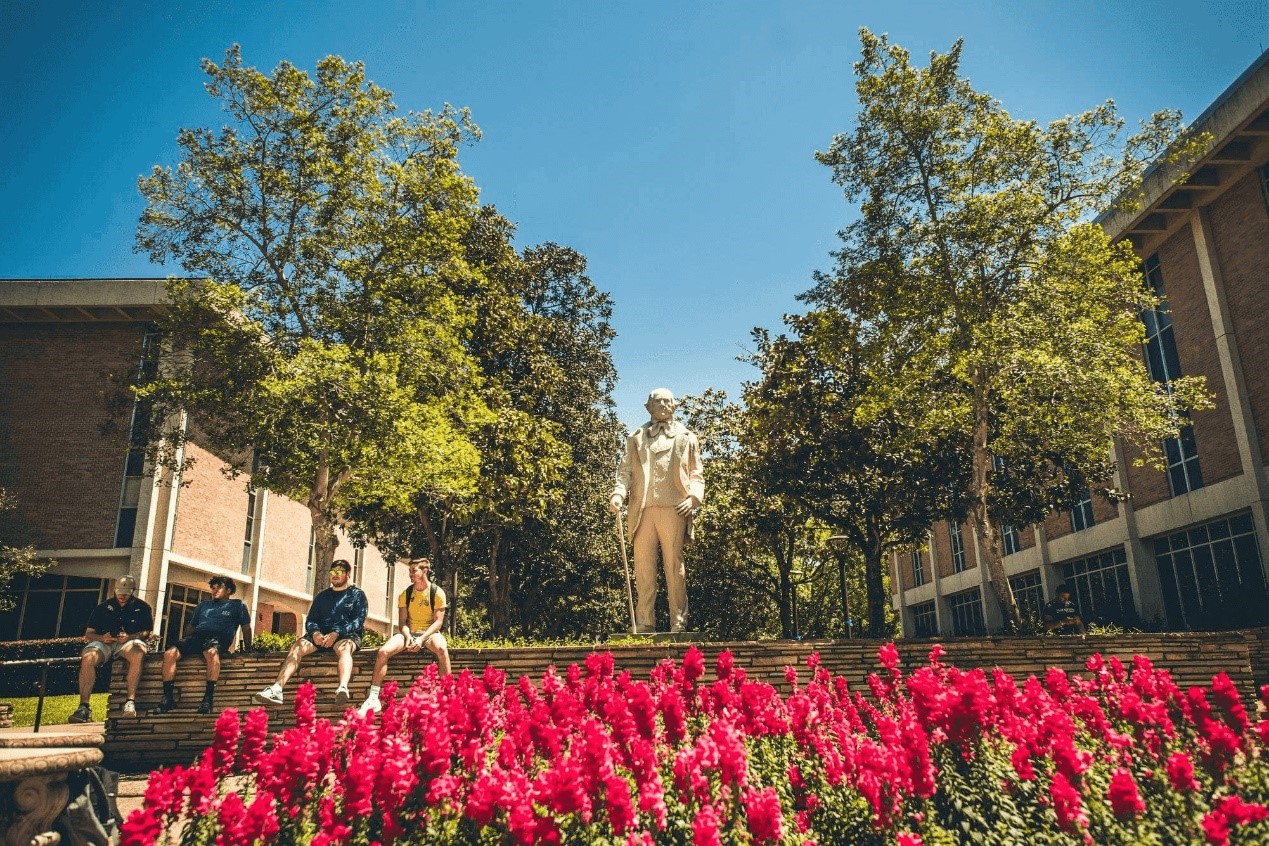
Sam Houston State University
Symposium Chair:
Personal Bio:
Dr. Enrique Mallen obtained his Ph.D at Cornell University. He regularly teaches courses on language, art and culture. He is Director of the Online Picasso Project. He has published extensively on language, art and literature. Among his most recent publications are the books Pablo Picasso: Fluctuant Identities (1900-1906) (2024), Eduardo Espina: Poesía del Deslenguaje (2024), Pablo Picasso: A Period of Transformation (1906–1916) (2023), Pablo Picasso and Dora Maar: A Period of Conflict (1936–1946) (2021) and Pablo Picasso: The Aphrodite Period (1924–1936) (2020).
Background
An essential and maybe surprising instrument for teaching history is art. However, paintings, drawings, and photographs can convey a wealth of information about historical occurrences. By looking at how artists recorded the past we can help them delve deeper into the circumstances that led to the events represented, analyzing the artist's viewpoint and decision-making, and evaluating them against other sources. Teaching history via art uses visual materials such as paintings, drawings, and sculptures to help students comprehend cultural viewpoints, assess historical events, and hone their critical thinking abilities. To make history interesting and relevant, teachers can choose a variety of artworks, help students analyze themes, symbols, and expressive language, and relate the artwork to its historical setting. Students' interest and comprehension would be further enhanced by interactive exercises including role-playing, field trips, and even making their own artwork. To assist students become better historical thinkers and foster more polite conversation, we must first provide them with the information and time to understand how an artist's approach might affect our interpretation of historical events. Students can then learn about history through making observations, posing queries, and discussing the links between art and history.
Goal/Rationale:
Things have changed since teachers had to use their local and private libraries to make art-based history slideshows. With just a computer click and a projector, we can now show students thought-provoking artwork. However, training students to evaluate the visual fine arts as a way to learn about the past requires intentional strategies. In this workshop we talk about methods for teaching history through art. We give examples of how to select artworks that depict historical figures, events, or ideas while taking into account the students' prior knowledge of the subject. We offer a visual analysis approach that demonstrates to students how to recognize themes and messages in artworks while also guiding them in observing details such as colors, shapes, patterns, and textures. We outline specific elements in the artwork that might have been triggered by particular historical events or a certain era under study; we analyze potential biases in the artist and his/her audience; we determine the potential value of the artwork as a historical document. The workshop will also provide ideas of how to include interactive activities so that students can get more deeply involved with the historical subjects. Additionally, we provide ideas on how to promote role-playing exercises in which students could pretend to be historical personalities or artists.
Call for Papers:
To assist students become better historical thinkers and foster constructive conversation, we must first provide them the information that could help them understand how an artist's approaches affect our interpretation of historical events. Students learn about history through making observations, posing queries, and discussing the links between art and history. The first step in selecting art for students to study is determining how the piece will be used in the lesson. For instance, introducing students to a new historical subject through an artwork might be an engaging experience. Consider the level of students' knowledge with the work's subject matter when deciding which artwork to utilize. Think about whether the artwork conveys a response to a historical ruling and how it could be used to start a conversation about the reasons behind people's responses and reactions. A variety of media forms must also be investigated. For pupils who are less accustomed to formal art, a political cartoon, for instance, can be a helpful starting point. A sculpture or other three-dimensional piece provides variation. Work that is overly abstract should be avoided because it could be hard for students to relate them to historical events. We must also examine works created by artists from diverse origins. When choosing an artwork, we must take into account any additional materials that could assist make the piece come to life. Texts that discuss how the work should be interpreted might be a useful tool for learning scaffolding. Organizations like the National Gallery of Art and the Metropolitan Museum of Art provide easily accessible online lesson plans, supplementary materials, and guided questions to facilitate the incorporation of art history into the classroom. Once students comprehend the particular methods employed in a work of art, it is necessary to explain how it could be connected to historical occurrences. As the students start their assignment, educators can provide tidbits of facts about the historical event. While some students can benefit from guided questions to help focus their observations, others will be able to steer the conversation in the direction the instructor desires. Starting with the fundamentals, one could ask students to evaluate what they learn about the time period or person from the artwork. After that, one can ask them to assess the artist's decisions in producing the image. What methods did he/she employ to express opposing viewpoints? What can be learned about the historical era from the methods employed? Does the artist's work have any omissions that provide insight into the era?
Topics
The main topics of this symposium are listed below.
Fine Arts & Design- Artificial Intelligence in Art
- Visual Arts
- Generative Art
- Immersive Installations
- NFTs and Digital Ownership
- Interactive Art
- Data Visualization Design
- Sustainable Art Practices
- Contemporary Art
- Art Criticism
- Animation Production
- Music and Dance Studies
- Bio-Art and Biodesign
- Traditional Media (Drawing, Painting, Sculpture)
- Digital Media (3D Animation, UX Design, Corporate Design)
- Commercial Design (Advertising, Editorial Design)
- Ethics and Applied Philosophy
- Metaphysics and Epistemology
- Political Philosophy and Governance
- Philosophy of Science and Technology
- Environmental and Climate History
- Military and Diplomatic History
- Religious and Cultural History
- Social Movements and Public History
- Post - Colonial Studies and Global History
- Philosophy of Mind and Consciousness
- Theoretical Sociology
- Historical Sociology
- Sociology of Knowledge
- Criminology
- Sociology of Religion
- Sociology of Economy
- Rural Sociology
- Urban Sociology
- Political Sociology
- Sociology of Demography
- Sociology of Law
- Industrial Sociology
- Anthropology
- Intercultural Communication & Cross - cultural Studies
Meanwhile, submissions aligned with the overall conference theme are also welcome.
Journalism & Mass Media- AI in Journalism
- Digital Transformation in Media
- Social Media Journalism
- Data Journalism
- VR and AR in Media
- Blockchain and Media Ownership
- Ethics in Digital Media
- Influencer and Social Media Journalism
- Cross - Platform Journalism
- Public Interest Media
- Traditional Sectors (Print Media, Electronic Media, Opinion Journalism)
- Specialized Journalism Types (Investigative, Political, Entertainment Journalism)
- Film and Film Production
- Photography and Film Production
- Theater and Film Studies
- Historical and Comparative Linguistics
- Applied and Educational Linguistics
- Sociolinguistics and Language Variation
- Computational and AI Linguistics
- Psycholinguistics and Cognitive Processing
- Forensic and Legal Linguistics
- Multilingualism and Language Policy
- Stylistics and Discourse Analysis
- Corpus Linguistics and Data Analysis
- Language Acquisition and Development
- Languages and Broadcasting
- Contemporary and New Century Literature
- Classical and Ancient Literature
- Literary Theory and Criticism
- Digital and Network Literature
- Gender Studies in Literature
- Cross - Cultural and Literary Translation
- Technical Translation and Localization
- Multimedia Translation and Adaptation
- Regional and Comparative Literature
- Environmental and Eco - Criticism in Literature
- Literature and Poetry
Submission
All submitted papers should report original and unpublished work, experimental or theoretical, and are not under consideration for publications elsewhere. All papers should be no less than 4 pages in length and must strictly follow the format of the symposium template. All papers are subject to reviews and edits. Prospective authors are kindly invited to submit full text papers that includes title, abstract, introduction, tables/figures and references. Other styles of papers are not accepted. Please submit your papers in both .doc/.docx AND .pdf formats as attachments via email to [email protected] by the given deadline. It is unnecessary to submit an abstract in advance.
Publication
Accepted papers of the symposium will be published in Communications in Humanities Research (Print ISSN 2753-7064), and will be submitted to Conference Proceedings Citation Index (CPCI), Crossref, CNKI, Portico, Google Scholar and other databases for indexing. The situation may be affected by factors among databases like processing time, workflow, policy, etc.
* The papers will be exported to production and publication on a regular basis. Early-registered papers are expected to be published online earlier.
This symposium is organized by ICLLCD 2026 and it will independently proceed the submission and publication process
Ways to Participate
Attendance Onsite
The symposium welcomes participants to attend on-site and share the innovative experiences and researches with the group. Therefore, we provide some general information about the visa application. If you want to attend the symposium on-site, please email the symposium committee: [email protected]
Visa
U.S. Visas (state.gov)In order to ensure the information is correct and up to date, there may be changes which we are not aware of. And different countries have different rules for the visa application. It is always a good idea to check the latest regulations in your country. This page just gives some general information of the visa application.
US Visa Information
The B-1/B-2 visitor visa is for people traveling to the United States temporarily for business (B-1) or for pleasure or medical treatment (B-2). Generally, the B-1 visa is for travelers consulting with business associates; attending scientific, educational, professional, or business conventions/conferences; settling an estate; or negotiating contracts. The B-2 visa is for travel that is recreational in nature, including tourism; visits with friends or relatives; medical treatment; and activities of a fraternal, social, or service nature. Often, the B-1 and B-2 visas are combined and issued as one visa: the B-1/B-2.
Application Items
If you apply for a business/tourist visa, you must pay your $160 application fee and submit the following:
- A Nonimmigrant Visa Electronic Application (DS-160) Form. Visit the DS-160 web page for more information about the DS-160.
- A passport valid for travel to the United States with a validity date at least six months beyond your intended period of stay in the United States (unless country-specific agreements provide exemptions). If more than one person is included in your passport, each person desiring a visa must submit an application.
- One (1) 2 x 2 inches (51 x 51 mm) photograph taken within the last six months.
- If a visa is issued, there may be an additional visa issuance reciprocity fee, depending on your nationality.
In addition to these items, you must present an interview appointment letter confirming that you booked an appointment through this service. You may also bring whatever supporting documents you believe support the information provided to the consular officer.
Supporting Documents
- Invitation letter from business or school.
- Detailed CV or resume including a list of publications.
- Complete itinerary, including all meetings, conferences, and visits; include names, addresses, and telephone numbers of your hosts.
- For other materials, please refer to the U.S. Embassy or Consulate website.
NOTICE:
Should your application be denied, the organizing committee cannot change the decision of visa officer, nor will ICLLCD engage in discussion or correspondence with the visa application center on behalf of the applicant. The registration fee CANNOT be refunded when the VISA application of individual being denied.
Important Info
Proceeding Title:
Communications in Humanities Research
Press:
EWA Publishing,
United Kingdom
ISSN:
2753-7064
(Print)
2753-7072
(Online)
Important Dates:
Symposium Date
March 31, 2026
Submission Deadline
March 24, 2026
Notification of Acceptance
7-20 workdays
Template:
Email:
Fees:
Registration Fee
USD 450 (cover 6 pages)
Additional Page
USD 40/extra page
Venue:
Sam Houston State University, 1905 University Ave, Huntsville, TX, USA